Did He Kick the Stigma? The Jim Irsay Dilemma

Jim Irsay, the late owner of the Indianapolis Colts, was a prominent figure in the NFL who did, to some extent, acknowledge his personal battles with addiction and mental health challenges. Irsay recently passed away from many health struggles. We see his many years in the public eye as a missed opportunity, and he diverted attention away from real mental health problems by blaming others. While he did start an initiative “Kicking The Stigma,” Irsay himself blamed physical injuries and his own fame for his mental health struggles, minimizing them for the non-wealthy and non-famous. While he is one of the few celebrities to even acknowledge a continuing struggle with mental health, there remains a conversation about the depth and breadth of his advocacy and whether more could have been done to effect systemic change.
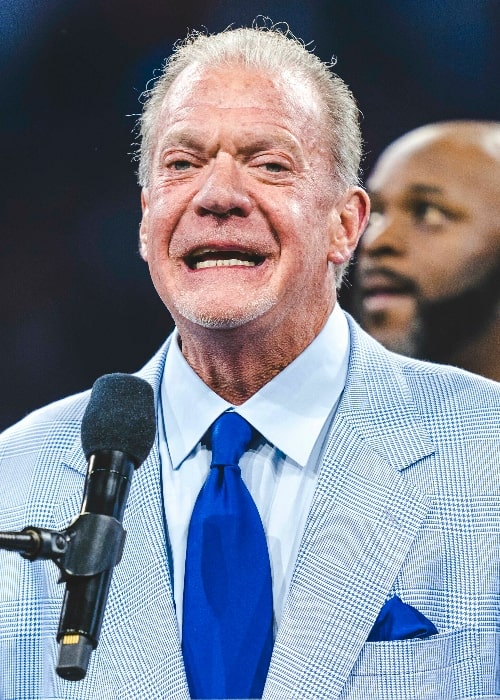
Acknowledging Personal Struggles

Irsay has revealed in 2014 that he had been to rehab over 15 times and had a near-fatal overdose that left him “code blue”, although not much followed in the subsequent years. That is certainly honorable in and of itself and was big news when it was revealed more than a decade ago. In 2020, Irsay and his family launched “Kicking The Stigma,” a campaign aimed at raising awareness about mental health disorders and removing the associated stigma. Through this initiative, the Irsay family committed over $17 million to expand mental health treatment, research, and awareness in Indiana and across the United States . They also donated $3 million to Indiana University to establish the Irsay Institute, focusing on researching and addressing the stigma surrounding mental health.

Missed Opportunities

Irsay inherited a professional football team from a demanding and difficult father, and his mental health struggles have been the subject of news stories for years. No one knows what anyone goes through on the inside, even the rich and famous (or especially the rich and famous). He could have talked about that in interviews or written a book, because those personal issues are very common in today’s world. He did not ever take a stand publicly to explain how he dealt with these issues, instead covering it up through empty initiatives where he donated a relatively small amount of money. While the public think he was public, he really was not, instead blaming football injuries and being improperly arrested in 2014 because he was a “white, rich billionaire”. He could have used his platform as a wealthy and famous person struggling with the same issues as regular people to talk about his own family life, marital struggles, or the emptiness of fame. While he should get credit for even acknowledging his struggles, he could have done more.

Impact and Reach

It is good to know that the “Kicking The Stigma” initiative has had a tangible impact, as it has been reported that Irsay Institute at Indiana University has become a hub for interdisciplinary research. But the NFL is ubiquitous in pop culture, and anything that is done there is amplified across the media landscape. Imagine if Irsay had advocated for mental health resources for everyone in Indiana, and took blame when he was arrested in 2014 rather than blaming surgery and profiling as he did. Or he could have spoken up about players who retired for personal reasons like Andrew Luck. He never said that Andrew’s decision to pursue other opportunities may have been mentally healthy for him, rather he stated how “heartbroken” he was and even tried to stop other teams from contacting him about a comeback. While it is unknown whether Luck struggled from something similar as Irsay, the world will now never know because Irsay never said anything (maybe Luck will one day). Anything the famous quarterback and Irsay said about mental health would have gone a long way to kicking the stigma, yet all that was done was to give money.

Legacy and Reflection

Jim Irsay’s initiatives have opened doors for conversations about mental health in sports and beyond. However, his passing invites reflection on the importance of sustained advocacy and taking ownership of one’s own struggles. Future efforts might focus on building upon his foundation to enact broader policy changes and ensure that mental health support is accessible and effective for all.

Poker Face – Why It is Hard to Take (Most) Celebrities Seriously When They Talk About Mental Health

Let’s talk about celebrities and mental health. Or rather, let’s talk about how celebrities don’t talk about mental health—unless they’re promoting a documentary, launching a foundation, or trying to distract us from their latest fashion disaster at the Met Gala.

Now, before you accuse me of being cynical, let me clarify: I’m all for people opening up about their struggles. But when it comes to celebrities, there seems to be a peculiar pattern. They either remain silent, or they share their deepest traumas in a glossy magazine spread, complete with a photoshoot that makes their “vulnerable” moment look like an ad for luxury skincare.

So, why the silence? Well, for starters, being a celebrity means living under a microscope. Every move is scrutinized, every word dissected. Admitting to mental health struggles could be seen as a sign of weakness, potentially jeopardizing their careers. After all, in the world of Hollywood, image is everything.

Take Ben Affleck, for example. He recently expressed empathy for Britney Spears, reflecting on the relentless paparazzi attention she endured during her personal struggles. Speaking on the podcast “This Past Weekend With Theo Von,” Affleck criticized the broader cultural phenomenon where celebrities are subjected to excessive media scrutiny and harassment, describing it as a form of “collective cruelty.”

Then there’s the issue of commodification. Mental health has become a trendy topic, and some celebrities might feel that sharing their struggles could be seen as jumping on the bandwagon. They fear being accused of exploiting their issues for publicity or financial gain. For example, Lady Gaga often talks about her mental health struggles, but earlier this week only minimized them when appearing at the Met Gala.

When the press ate this up, this is not exactly the type of seriousness that can be then turned around when she decides to discuss her mental health. It is hard to take celebrities seriously who discuss their mental health only when it’s convenient. It minimizes the seriousness that most non-famous people face every day when dealing with their own struggles.

Breaking the Mold: The Courage of Dwayne Johnson and the Power of Vulnerability

In a world that often equates masculinity with emotional toughness and stoicism, it takes an extraordinary amount of courage for a man—especially one widely regarded as the epitome of strength—to speak openly about personal struggles with mental health. Dwayne “The Rock” Johnson, a globally recognized actor, former professional wrestler, and cultural icon, has done just that. Known for his chiseled physique, commanding presence, and charismatic confidence, Johnson represents what many might call the “tough guy” archetype. Yet, in recent years, he has shattered those stereotypes by candidly discussing his battles with depression. His willingness to be vulnerable not only challenges harmful societal norms but also empowers countless individuals to seek help and believe in the possibility of overcoming mental health challenges.

For decades, male figures in popular culture—particularly those celebrated for their physical strength—have been discouraged from showing emotional vulnerability. The traditional image of a strong man has often excluded the possibility of sadness, anxiety, or despair. Mental health struggles were considered weaknesses, especially among men, and this stigma contributed to silence, shame, and suffering. When someone like Dwayne Johnson steps forward to share his story, it sends a powerful message: mental health issues are not signs of weakness; they are human experiences.

Johnson has spoken about experiencing depression at various points in his life, including during his early football career at the University of Miami and after the breakdown of a relationship. Rather than bury these memories or pretend they never happened, he has chosen to speak about them publicly. “Depression doesn’t discriminate,” he once said in an interview, “and neither should we.” His words resonate precisely because they come from someone who defies outdated notions of what it means to be emotionally resilient. By showing that even the “toughest” among us can suffer from depression, Johnson makes it easier for others—especially men—to accept their own struggles and seek support.

The courage it takes for someone of Johnson’s stature to talk about mental health cannot be overstated. In an industry that often rewards image over authenticity, choosing to be open about something as personal as depression is a radical act. Johnson’s decision to use his platform in this way reflects a deeper kind of strength—one rooted not in muscles or action-hero roles but in emotional honesty and compassion. This form of strength, though quieter and less visible, may be even more powerful.

More importantly, Johnson’s openness has a ripple effect on society. When celebrities acknowledge their struggles, they help normalize the conversation around mental health. For fans who admire Johnson, especially young men who may idolize his strength and success, his message provides a new blueprint for masculinity—one that includes vulnerability, emotional expression, and healing. It offers hope that it is possible to face dark moments and come out stronger, not by hiding pain but by confronting it head-on.

This visibility is particularly crucial given the mental health crisis affecting people around the world. Depression and anxiety are among the most common mental illnesses, yet many who suffer do so in silence. Stigma, fear, and lack of awareness prevent countless individuals from reaching out for help. When someone like Johnson says, “You’re not alone,” those words carry immense weight. They help dismantle the isolation that so often accompanies mental health struggles and replace it with a sense of community and shared humanity.

Moreover, Johnson’s example is a reminder that healing is possible. His journey shows that success and mental health challenges are not mutually exclusive. One can battle depression and still build a thriving career, nurture healthy relationships, and inspire others. This is a vital lesson for anyone feeling hopeless or broken: your story doesn’t end with suffering. Like Johnson, you can write new chapters filled with purpose, growth, and resilience.

In a time when authenticity is often rare in public life, Dwayne Johnson’s willingness to reveal his struggles stands out as a beacon of hope and strength. His story redefines what it means to be courageous. It’s not just about performing stunts on a movie set or winning wrestling titles—it’s about standing up, speaking out, and showing others that it’s okay to not be okay. In doing so, Johnson not only breaks the mold of traditional masculinity but also opens the door for a more compassionate and honest culture around mental health.

By embracing vulnerability and sharing his truth, Dwayne “The Rock” Johnson proves that real strength lies not in hiding your pain, but in confronting it—and using your story to help others heal. His courage empowers us all to be a little more open, a little more kind, and a lot more human.

We Owe Britney Spears an Apology—And I’m Tired of the Media Acting Like We Don’t

Let’s talk about Britney Spears. Not “pop princess” Britney. Not the tabloid punchline. The real Britney Spears. The woman who was chewed up and spit out by a media machine that mocked her pain and sold her suffering like it was entertainment.

Back in the early 2000s, Britney was everywhere. And not in a good way. The same magazines that built her up as America’s sweetheart were the first to tear her down when she showed signs of struggling. When Britney shaved her head in 2007, it was treated like a joke. A meme. A meltdown for the world to watch. But it wasn’t funny. It was a woman in pain, a woman clearly dealing with a mental health crisis, being hunted by paparazzi and humiliated by gossip blogs and late-night talk shows.

She needed help. Instead, she got headlines calling her “crazy,” photos sold for millions, and comedians making her the butt of their jokes. The media didn’t ask what was wrong—they asked how they could profit off it. It was disgusting. Imagine having one of the hardest moments of your life broadcast to the world, and instead of compassion, all you get is laughter.

And it wasn’t just the press. The entire system failed her. She was placed under a conservatorship—treated like a child, her personal life and career controlled by others—because people decided she was too “unstable” to take care of herself. But how much of that instability was made worse by the constant harassment, pressure, and public shaming?

What’s even worse is that this wasn’t a one-time thing. The media has a pattern of doing this. Whether it’s Lindsay Lohan, Amanda Bynes, or even Kanye West, celebrities dealing with mental illness are dehumanized. We mock them instead of supporting them. Why? Because it gets clicks? Because it’s easier to laugh than to care?

If this is how we treat the most famous people on the planet, what does that say to the rest of us who are struggling? That we should be ashamed? That our pain is something to be mocked?

We say we care about mental health. We post quotes about “checking in on your friends” and “ending the stigma.” But where was that energy when Britney was crying in the back of an ambulance or being hounded by photographers at gas stations?

We can’t change what happened to Britney Spears. But we can admit it was wrong. We can stop supporting media outlets that profit off mental illness. And we can finally start treating people—famous or not—with the humanity they deserve.

It’s way past time. Britney deserved better. So does everyone else.

Selena Gomez and the Courage to Be Real

When people think of celebrities, they usually imagine fame, money, and red carpets—not anxiety, depression, or therapy. But mental health doesn’t care about your follower count. That’s something actress and singer Selena Gomez has taught the world through her honesty, her struggles, and her strength. In a world that often pressures people—especially young women—to be perfect, Gomez’s willingness to speak about her mental health challenges is not only brave but incredibly important.

Selena Gomez has been in the public eye since she was a kid. She started acting on Barney & Friends and later rose to fame as the lead in Disney’s Wizards of Waverly Place. By the time she was in her twenties, she was also a successful singer, producer, and one of the most followed people on Instagram.

Over the years, she has opened up about dealing with anxiety, depression, and even bipolar disorder. In 2020, she shared during an Instagram Live conversation with Miley Cyrus that she had recently been diagnosed with bipolar disorder. For a celebrity with such a massive following, sharing something so personal was a huge deal. It wasn’t just news—it was a moment of connection for millions of fans who deal with similar issues but often feel alone or ashamed.

What makes Selena Gomez’s journey so powerful is not just that she’s famous, but that she’s honest. She doesn’t sugarcoat the hard parts. In interviews, she’s talked about crying in bed, feeling lost, and dealing with panic attacks. She’s even admitted to needing time away from social media and the spotlight to take care of herself. This kind of openness is rare in the entertainment industry, where perfection is often expected and mental health is still misunderstood.

Gomez has not only talked about her struggles but taken action to prioritize her well-being. She’s spent time in mental health treatment centers and works with therapists. In her Apple TV+ documentary, Selena Gomez: My Mind & Me, she gives fans an unfiltered look at her emotional ups and downs, showing scenes from therapy sessions, breakdowns, and moments of reflection. It’s raw and uncomfortable at times—but that’s what makes it so meaningful. She’s not just telling people that mental health matters; she’s showing what the journey really looks like.

In addition to working on her own healing, Selena has become an advocate for others. In 2020, she launched Wondermind, a mental fitness platform that provides tools and resources for emotional well-being. She’s also worked with organizations like Mental Health America and spoken at the White House about the importance of mental health education and access to care. By using her platform for something so real and personal, she’s helping change the way society talks about mental health.

One of the most inspiring things about Selena Gomez is how she continues to grow and show up, even when things are hard. She’s said that there were times she didn’t know if she could go on, but she kept going—not just for herself, but for others who might be struggling too. That kind of vulnerability takes more strength than any performance on stage or screen.

Selena once said in an interview, “If I’m known for anything, I hope it’s just simply for the way I care about people.” Through her openness about her mental health, that’s exactly what she’s done. A lot of young people deal with anxiety, depression, and pressure to be perfect—whether it’s from school, social media, or family expectations. Young people often lack the words to express how they feel, and do not know where to turn for answers. When someone as famous as Selena Gomez says “I’ve been there,” it makes people feel seen. It shows that it’s okay to ask for help. It’s okay to not be okay.

In a society where mental health is still often treated as a weakness, Selena Gomez is helping rewrite the script. She’s shown that you can be successful and still struggle. You can be vulnerable and still be strong. And most importantly, you don’t have to hide who you are to be worthy of love, support, and healing.

Finding Strength in Vulnerability: How Kevin Love Faced His Mental Health Struggles

NBA star Kevin Love decided to break the silence on mental health struggles. By sharing his personal experiences with anxiety and panic attacks, he not only helped himself but also became a powerful voice for mental health awareness. Love was one of the most famous athletes ever to publicly admit to having mental health struggles. While many athletes have mentioned facing various types of adversity, Love was unique in admitting that it was a mental health issue.

With a successful basketball career, fame, and millions of fans, many assumed his life was perfect – 5x NBA All-Star and NBA champion. But underneath his strong athletic exterior, Love was facing internal battles that most people never saw.

Everything changed on November 5, 2017. During a game against the Atlanta Hawks, Love experienced a terrifying panic attack right on the court. He had trouble breathing and felt like the walls were closing in. It was a scary and confusing moment for him. At first, he tried to hide it, not wanting to appear weak in front of his teammates or coaches. But this event forced him to recognize that he needed help.

In March 2018, Love made a bold move. He published an essay titled “Everyone Is Going Through Something” in The Players’ Tribune, an online sports publication. In the essay, he opened up about his panic attack and the emotional struggles he had kept hidden for years. He talked about how he grew up thinking that men, especially athletes, shouldn’t show vulnerability. Love wrote, “Growing up, you figure out really quickly how a boy is supposed to act. You learn what it takes to ‘be a man.’ It’s like a playbook: Be strong. Don’t talk about your feelings. Get through it on your own.”

By writing this essay, Love helped break the stigma surrounding mental health, especially in male-dominated environments like professional sports. Many athletes, fans, and even people outside the sports world praised him for his honesty. His courage inspired other athletes, such as DeMar DeRozan, to speak out about their own mental health issues.

But Kevin Love didn’t just stop at sharing his story. He also took steps to work on his own well-being. One of the most important things he did was begin therapy. Talking to a licensed therapist helped him understand his anxiety and panic attacks. He learned that mental health is just as important as physical health, and that seeking help isn’t a sign of weakness—it’s a sign of strength.

In addition to therapy, Love adopted healthier coping strategies. He started practicing mindfulness and meditation, which helped him stay calm and focused. He also became more aware of the importance of sleep, diet, and exercise—not just for his body, but for his mind as well.

As his mental health improved, Love realized he wanted to help others who might be struggling in silence. In 2018, he launched the Kevin Love Fund, a foundation focused on mental health education and emotional well-being. The fund partners with schools, universities, and other organizations to provide tools and resources for people dealing with anxiety, depression, and other mental health challenges.

Love’s efforts didn’t go unnoticed. He became a role model not just for young athletes, but for anyone who has ever felt overwhelmed or alone. He gave a TED Talk titled “The Power of Vulnerability,” where he encouraged people to be open about their feelings. In the talk, he said, “It’s important to talk about these things. It’s important to let people know they’re not alone.”

Today, Kevin Love continues to use his platform to promote mental health awareness. Whether he’s speaking to students, writing essays, or working with mental health organizations, his message remains the same: It’s okay to not be okay. What matters is taking the steps to get help and supporting others along the way.